From Silent Halls to Digital Horizons
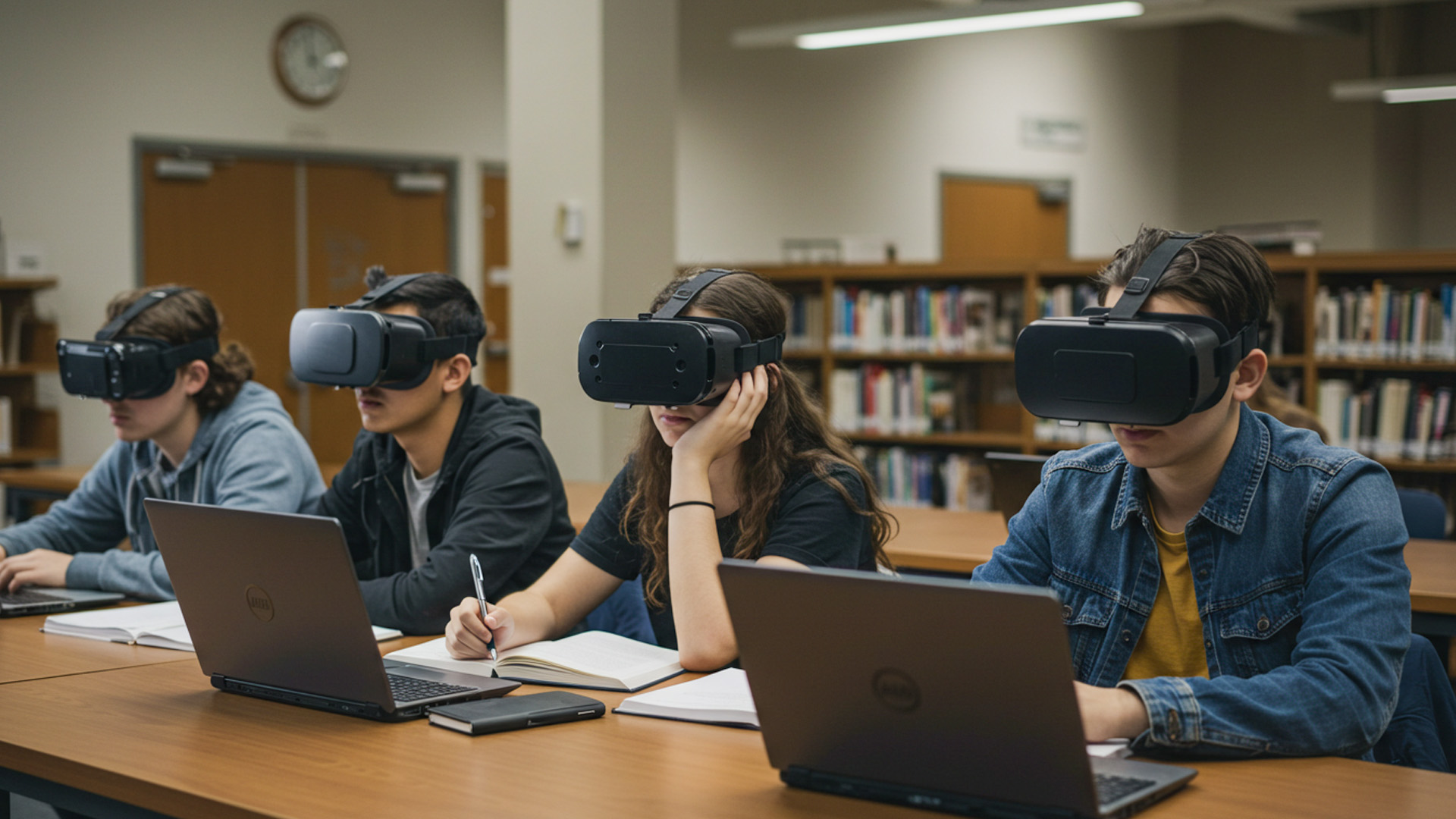
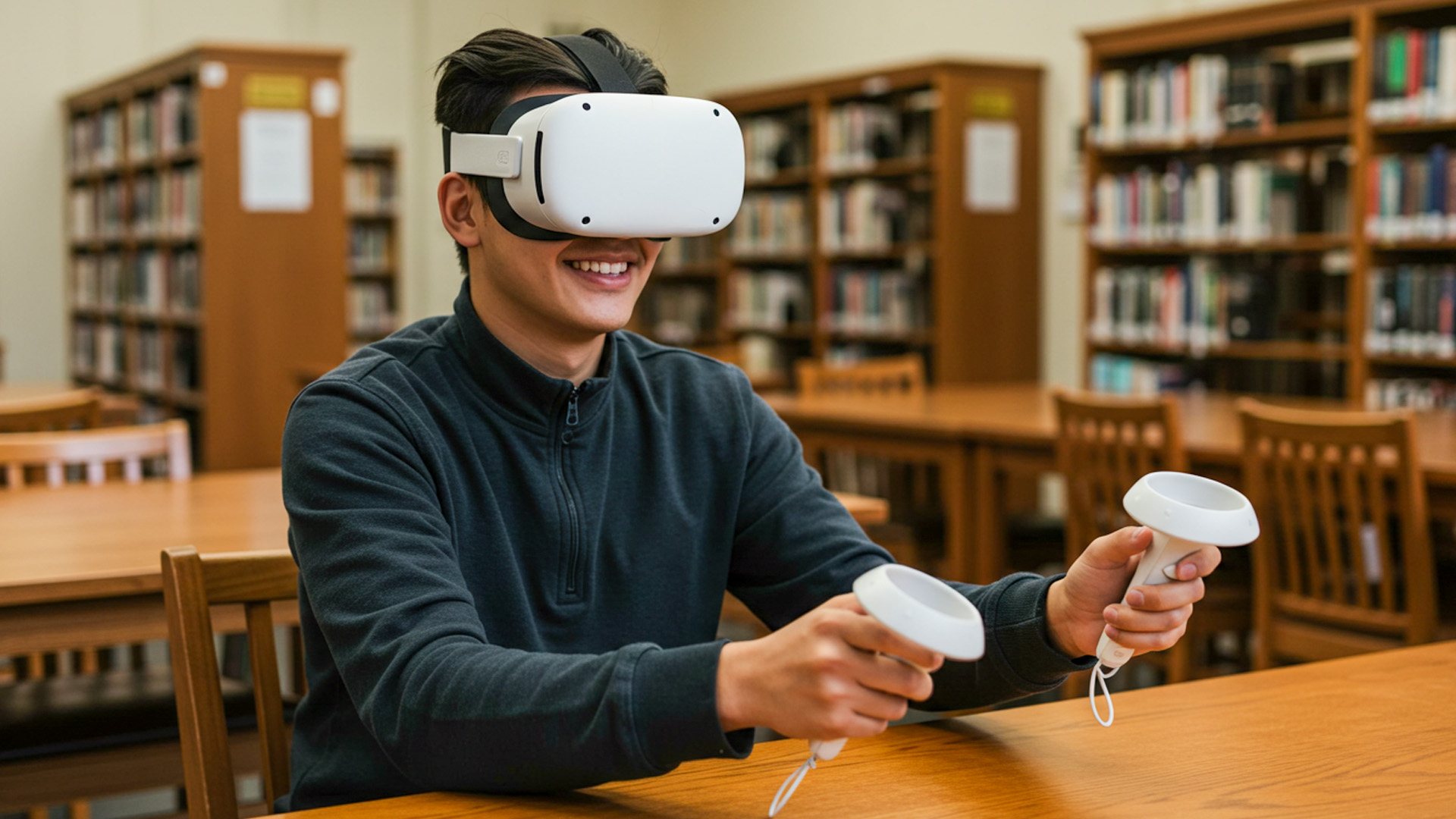
Imagine stepping into a library where the shelves don’t just hold books—they open portals. Once quiet, marble-floored sanctuaries of hushed voices and ink-smelling tomes, university libraries are transforming into immersive arenas of knowledge where students slip on VR headsets and step into dynamic, collaborative worlds. This isn’t simply digitization; it is a re-imagining of the academic commons. The shift to VR is as monumental as the move from scroll to codex. In these immersive hubs, students explore three-dimensional archives, manipulate molecules, rehearse surgical procedures, or even reconstruct ancient civilizations. The physical library remains, but its role is refracted into a living, breathing extension of the mind—an intellectual holodeck. What follows is a journey through this transformation, uncovering how VR libraries reshape learning, collaboration, and imagination in higher education.
Reimagining Space: Libraries Without Walls
Breaking Architectural Boundaries
For centuries, a library’s walls defined its reach. Stone, wood, and mortar imposed physical limits on how many resources could be stored and how far knowledge could stretch. In the immersive age, those walls dissolve. Imagine a student walking through a VR reconstruction of Alexandria’s legendary library—no longer a historical loss, but a fully explorable realm. These boundless designs allow for “stackless stacks,” infinite layers of information that can be navigated spatially rather than alphabetically. Architecture itself becomes pliable: staircases to nowhere, floating archives, and collaborative atriums suspended in digital sky. In this way, libraries transition from static storerooms to dynamic landscapes where the built environment obeys imagination rather than gravity.
This shift doesn’t discard architecture but reframes it. Physical buildings become gateways—portals into immersive terrains where each wall, alcove, or reading room extends infinitely into VR. Just as books once multiplied ideas beyond oral tradition, VR multiplies architecture beyond brick and mortar. It’s less about replacing the building than layering realities: a physical place that anchors, and a virtual plane that expands. Students gain not just access to information, but agency to shape the spaces where they learn. In these libraries without walls, the act of studying becomes spatial storytelling.
The Library as a Holodeck
Think of a library where biology majors don’t flip through anatomy textbooks—they shrink down, Fantastic Voyage-style, to walk through ventricles and arteries. In this holodeck-like paradigm, knowledge is not read but lived. Rather than static consumption, VR invites embodied cognition, the idea that we learn not only with our minds but also through our bodies and senses. A chemistry student stirs a simulated beaker and watches molecules bond in real time; an architecture student tours their digital blueprint, noting light, space, and scale before construction begins. Every subject gains dimensionality, as if textbooks were peeled open and their diagrams stepped into.
By turning abstract ideas into navigable landscapes, the library ceases to be a storehouse of texts and becomes an experiential gateway. The metaphor of the “holodeck” resonates here—spaces tailored to specific learning goals, morphing at the flick of a switch. What once required expensive lab equipment or travel becomes accessible through shared headsets and robust servers. The cost of immersive content is dwarfed by its impact: deeper engagement, reduced cognitive load, and better retention. When knowledge can be walked through, touched, or manipulated, the library transforms from passive archive to active laboratory of the imagination.
Spatial Storytelling in Academia
In immersive libraries, stories no longer rest between two covers. Instead, they unfold as spatial narratives—learning journeys that the student literally traverses. For example, a history seminar might begin in the cobbled streets of Renaissance Florence, guiding learners past virtual art workshops and marketplaces before transporting them to lecture halls where Machiavelli drafts political treatises. The act of moving through space mirrors the act of absorbing context, weaving facts into lived experience. This is storytelling writ in architecture and physics, not just ink and paper.
Spatial storytelling in libraries offers more than novelty. It aligns with cognitive theories of memory palaces, where ideas are anchored to locations. VR turns this metaphor into literal practice, allowing students to organize information within immersive environments. A physics formula might be remembered because it was “etched” into a digital chalkboard floating beside an orbiting satellite. A linguistic concept might stick because it was encountered in a VR reconstruction of ancient Mesopotamia. The fusion of narrative and spatial experience creates a mnemonic symphony—one where libraries become orchestras of learning rather than warehouses of silence.
Augmented Collaboration: From Study Carrels to Shared Realities
Virtual Group Study Pods
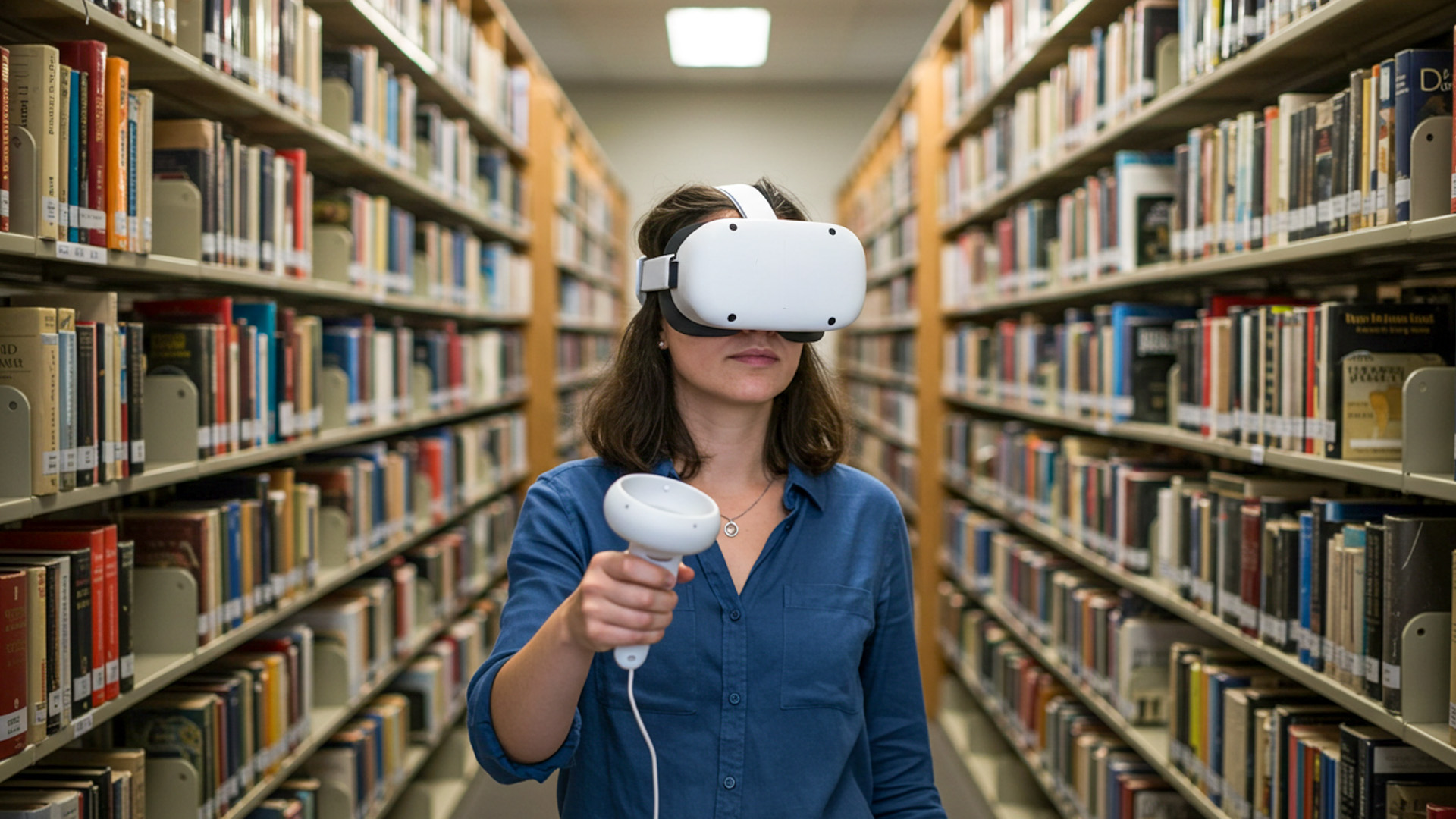
Traditional libraries partition students into carrels—tiny islands of focus surrounded by seas of silence. While ideal for solitary study, they often stifle collaborative energy. VR replaces carrels with group study pods that float like capsules in virtual space, where distance and walls no longer apply. Students from Johannesburg, São Paulo, and Tokyo can sit in the same pod, passing around virtual notes, 3D models, or annotated slides. Unlike video conferencing, this setup captures spatial presence—the subtle sense of “being there”—which boosts empathy, engagement, and communication clarity.
These pods are more than glorified chat rooms. They simulate real-world collaborative dynamics, allowing students to gesture toward shared diagrams or walk around a 3D model while debating. This fosters the kind of embodied teamwork essential in fields from engineering to drama. A digital library thus becomes an agora—an open square of ideas where cultural borders blur and intellectual exchange thrives. Where once study groups were bound by campus geography, VR liberates them, extending the university commons into a planetary network of minds.
Immersive Debate Chambers
Imagine walking into a virtual chamber where holographic podiums glow, each occupied by avatars of students debating constitutional law. The library evolves into a civic space where rhetoric, persuasion, and dialectic are practiced in arenas modeled after ancient forums or futuristic domes. These immersive debate chambers enable not only speech but performance, with spatial acoustics, gestural nuance, and audience feedback all woven into the experience. The environment itself can shift—from a medieval hall to a UN-style assembly—depending on the course or theme, immersing learners in the context of discourse.
Such chambers train more than intellectual sharpness; they nurture confidence and empathy. Students see not faceless text responses but expressive avatars whose body language and tone enrich the exchange. This adds depth to learning communication—an aspect often underdeveloped in textual or digital-only debates. By transforming the library into a theater of ideas, universities cultivate graduates prepared for a world where persuasion is as vital as proficiency. The immersive chamber becomes less an add-on than an essential rehearsal space for democratic participation.
Collaborative Research Expeditions
Instead of leafing through dusty archives, research teams can embark on VR expeditions where primary sources and data sets become landscapes. A group of archaeology students might reconstruct a dig site, uncovering virtual artifacts in real-time while sharing insights. A medical research team might walk through a giant VR genome map, each member highlighting sections relevant to their expertise. These expeditions transform research from isolated reading into shared exploration—scholarship as expeditionary journey rather than solitary trek.
Collaboration in these settings goes beyond convenience. It reshapes the ethos of academic inquiry, emphasizing co-presence, shared discovery, and interdisciplinary fusion. A VR research expedition fosters serendipity: the accidental but powerful insight sparked when two students from different fields encounter the same immersive model. By making knowledge spatial and collective, immersive libraries nurture the kind of integrative thinking essential in solving complex global challenges. The university library, once a solitary archive, becomes a launchpad for intellectual voyages of discovery.

Expanding Access: Equity in the Virtual Stacks
Universal Accessibility Design
The traditional library promised equal access, but barriers—physical, economic, or geographical—often persisted. VR libraries reassert this mission with new vigor. Through careful universal design, students with mobility impairments can navigate immersive stacks without stairs or heavy books. Text can be enlarged to planetary scale, read aloud through AI narrators, or translated in real time. Interfaces can adapt dynamically, tailoring themselves to a learner’s needs, whether through tactile haptics, voice commands, or gaze-based controls. The library no longer assumes a single body or mind—it flexes to fit the diverse forms of human presence.
This inclusivity also extends beyond disability. Students living far from campus, constrained by jobs or family care, can access VR libraries without displacement. The immersive commons restores equity by flattening geographical divides and neutralizing socioeconomic constraints. When libraries move into VR, the vision of a truly universal university space—open to every curious mind—edges closer to reality. Accessibility ceases to be an afterthought; it becomes the core architecture of knowledge itself.
Democratizing Expensive Resources
Not every student can afford cadavers for anatomy study, wind tunnels for aerodynamics, or international archives for research. VR libraries flatten this hierarchy by democratizing access to resources that once required privilege or proximity. A rural student with a modest headset can dissect a virtual heart as vividly as a student in an elite medical lab. Similarly, archives from distant continents can be virtually reconstructed, browsed, and annotated without costly travel. What once required elite funding now becomes as accessible as checking out a digital book.
This democratization mirrors the printing press’s revolution centuries earlier: what was once scarce becomes abundant. The library’s promise—to provide access regardless of wealth—is not only preserved but amplified. Virtual stacks ensure that the brightest ideas do not remain bottled within ivory towers but radiate across diverse demographics. In this reframed ecosystem, learning is not gated by hardware costs but opened by collective investment in shared infrastructure. The stacks of privilege collapse, replaced by an egalitarian terrain of boundless opportunity.
Global Classrooms in VR Libraries
Picture a student in Nairobi studying comparative literature while standing shoulder-to-shoulder with a peer from Berlin inside a VR Shakespearean playhouse. Global classrooms dissolve the boundary between “foreign study” and “local study.” Instead of flying across continents, learners meet in shared immersive environments. The university library becomes both host and portal, linking institutions across the world in joint VR curricula. This creates new dimensions of academic diplomacy, where collaboration transcends language, culture, and time zones.
Such experiences transform libraries into international campuses. Students learn not only content but cultural empathy, seeing global peers not as distant faces on a screen but as co-present avatars engaged in shared discovery. The immersive commons creates intellectual neighborhoods where diversity isn’t an abstract principle but a lived daily practice. In these virtual stacks, global citizenship ceases to be a concept in textbooks—it is rehearsed in every collaborative exchange. The VR library thus becomes both classroom and crossroads, shaping students into scholars and global citizens simultaneously.

Challenges and Future Trajectories
Ethical Stewardship of Virtual Knowledge
Every leap forward carries shadows. As libraries digitize into immersive spaces, questions of stewardship arise: Who owns the virtual stacks? Who curates, protects, and preserves VR knowledge for posterity? If content is licensed, rented, or built by private firms, do universities risk outsourcing the very memory of civilization? The library’s role as guardian of the commons becomes complex when data is proprietary code and experiences are subscription models. Without vigilance, immersive libraries could trade access for dependence, surrendering scholarly autonomy to corporate gatekeepers.
Universities must therefore act as ethical custodians, ensuring VR archives remain open, interoperable, and transparent. Just as librarians once fought for open access journals, they must now advocate for open standards in immersive environments. Stewardship in VR is less about dust jackets and acid-free paper than about metadata integrity, version control, and digital sovereignty. The future of academic freedom may well hinge on whether VR libraries are built as walled gardens or open landscapes. The stakes are as immense as the opportunities.
Balancing Presence with Overwhelm
While immersive environments heighten engagement, they also risk sensory overload. Students unused to constant visual, auditory, and haptic stimuli may find themselves fatigued or distracted. Libraries must therefore strike a balance: curating experiences that amplify learning without drowning it in spectacle. Think of it like seasoning in a dish—VR should enrich, not overwhelm. A mathematics proof need not unfold with fireworks; sometimes clarity demands simplicity, even in virtual form. Restraint becomes as important as innovation.
This balancing act also involves mental health. Too much immersion can blur lines between study and escapism. Universities must develop guidelines, integrating VR with traditional study rather than replacing it wholesale. Just as libraries once balanced silence with group work, they must now balance presence with pause. The immersive commons must remain a place of focus, not fatigue. With thoughtful design, VR can magnify clarity rather than clutter, crafting a space where intellect thrives without sensory saturation.
Envisioning Tomorrow’s Knowledge Commons
What might the university library look like in fifty years? Perhaps it is less a building than a constellation—an interconnected VR network of institutions where a student at one university can “walk” into the stacks of another across the globe. Or perhaps it merges seamlessly with augmented reality, overlaying physical shelves with digital annotations, 3D holograms, and AI-guided pathways. In either case, the library remains a constant: humanity’s enduring dedication to collective knowledge. What shifts is not the mission but the medium.
This future is not guaranteed, but it is beckoning. Universities that embrace VR libraries are not just innovating—they are rehearsing the next chapter in civilization’s story of learning. From clay tablets to manuscripts, from microfilm to online catalogs, each evolution in the library’s history redefined the contours of access. Now, as immersive technologies rise, the library prepares once again to molt its skin, revealing new forms of brilliance. The knowledge commons, ever resilient, adapts to remain humanity’s grandest stage of imagination.