
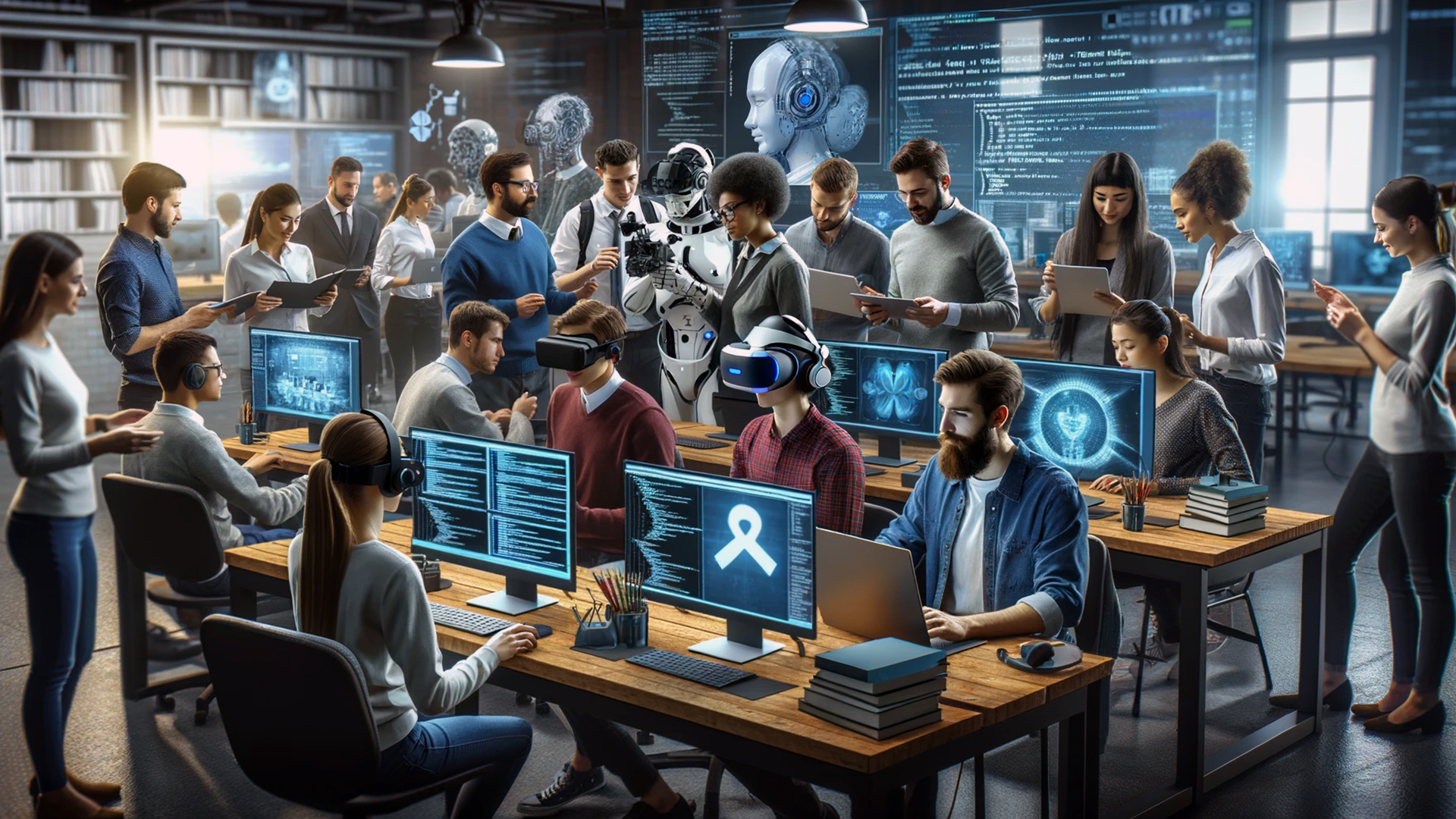
The advent of virtual reality (VR) technology has opened new horizons in various sectors, with education standing at the forefront of this revolution. Universities, as bastions of learning and innovation, are uniquely positioned to benefit from the integration of VR into their curriculums. The potential for enhanced learning experiences through VR is immense, but so are the challenges in its development and implementation. This is where collaboration between universities comes into play, offering a pathway to more effective, accessible, and innovative VR-based educational solutions.
Pooling Resources for Advanced Development
The development of VR solutions requires significant resources, both in terms of expertise and finance. By collaborating, universities can pool their resources, allowing for the sharing of costs and the amalgamation of diverse expertise. This collective approach can lead to the creation of more sophisticated and versatile VR applications than what might be achievable individually.
Standardizing VR Educational Content
A collaborative approach can aid in standardizing VR educational content across different institutions. This standardization ensures that students, regardless of their university, have access to high-quality, consistent VR learning experiences. It can also facilitate the transfer of credits and the recognition of qualifications across institutions.
Fostering Innovation Through Diverse Perspectives
Collaboration brings together diverse perspectives, which is a key driver of innovation. Universities with different specializations and research focuses can contribute unique insights, leading to the creation of VR content that is not only educationally valuable but also innovative and cutting-edge.
Enhancing Accessibility and Reducing Inequality
Developing VR solutions collaboratively can enhance accessibility, making these advanced tools available to a broader range of institutions, including those with limited resources. This cooperative approach can play a significant role in reducing educational inequality, ensuring that cutting-edge technological advancements are not just the privilege of the few.
Preparing Students for a Technology-Driven Future
Collaborative development of VR curriculums ensures that students across universities are well-prepared for a future that is increasingly reliant on technology. Exposure to VR technology not only enhances their learning experiences but also equips them with skills that are becoming increasingly essential in the modern workforce.
Virtual Reality University is Encouraging Collaborative Research and Development
Collaboration can stimulate further research and development in the field of VR in education. As universities work together, they can embark on joint research projects, pushing the boundaries of how VR can be used in educational settings.
The collaborative development of VR-based curriculums represents a forward-thinking approach that aligns with the evolving needs of the educational landscape. It offers a way to overcome the challenges of resource constraints and expertise limitations while enhancing the quality and accessibility of VR educational tools. By working together, universities can not only enrich their educational offerings but also contribute to the broader goal of making advanced educational technology more accessible and effective. This collaboration not only benefits the students and faculties involved but also signals a progressive step towards a more integrated and technologically adept educational system.
The mission of Virtual Reality University (VRU) to encourage collaboration among universities for the development of VR-based educational solutions aligns with several key objectives and benefits. VRU aims to empower people to become actively involved in the Metaverse, focusing on various aspects like 3D modeling, animation, virtual tours, programming, and VR/AR application development for educational solutions. This mission is divided into three main objectives: developing the Education Metaverse for users, teaching VR, AR, and Metaverse software development, and becoming a portal for universities and colleges working on VR education solutions.
VRU is committed to providing bespoke VR and AR education solutions and learning software for universities and students, believing that the future of high-quality education lies in VR and AR learning experiences. They emphasize the natural human propensity to learn best in 3D environments, where all senses can be used to explore spaces and objects. The concept of the Education Metaverse, a collaborative space where university students can engage in simulations and real-world scenarios, facilitates interaction among students, tutors, and lecturers interested in similar experiences.
The collaboration fostered by VRU offers several significant benefits to participating universities:
- Resource Sharing and Cost Efficiency: Collaborating universities can share resources, reducing the cost and effort required to develop individual VR solutions. This pooling of resources leads to more efficient use of funding and manpower.
- Enhanced Educational Quality and Standardization: Joint development efforts can lead to higher quality and more standardized VR educational content. This standardization is crucial for ensuring that students across different universities receive a similar quality of VR-based education.
- Diverse Perspectives and Innovation: Collaboration brings together varied perspectives from different institutions, fostering innovation. This diversity is vital for creating VR content that is not only educationally valuable but also cutting-edge.
- Increased Accessibility and Equity: By working together, universities can make VR technology more accessible to a wider range of institutions, including those that might otherwise lack the resources to develop such technologies independently. This approach plays a key role in reducing educational disparities.
- Preparation for a Technologically Advanced Future: Collaborative development of VR curriculums ensures students are prepared for a future increasingly reliant on advanced technology. Exposure to VR not only enhances learning but also equips students with essential future skills.
- Stimulated Research and Development: Joint efforts can lead to further research and development in VR education, pushing the boundaries of how this technology can be used in academic settings.
In conclusion, VRU’s mission to facilitate collaboration among universities in developing VR-based curriculums aligns with a broader vision of enhancing educational experiences, fostering innovation, and preparing students for a technologically advanced future. This collaborative approach is pivotal in maximizing the potential of VR in education, making it a powerful tool in the modern academic landscape.