
A Glimpse into the Academic Metaverse
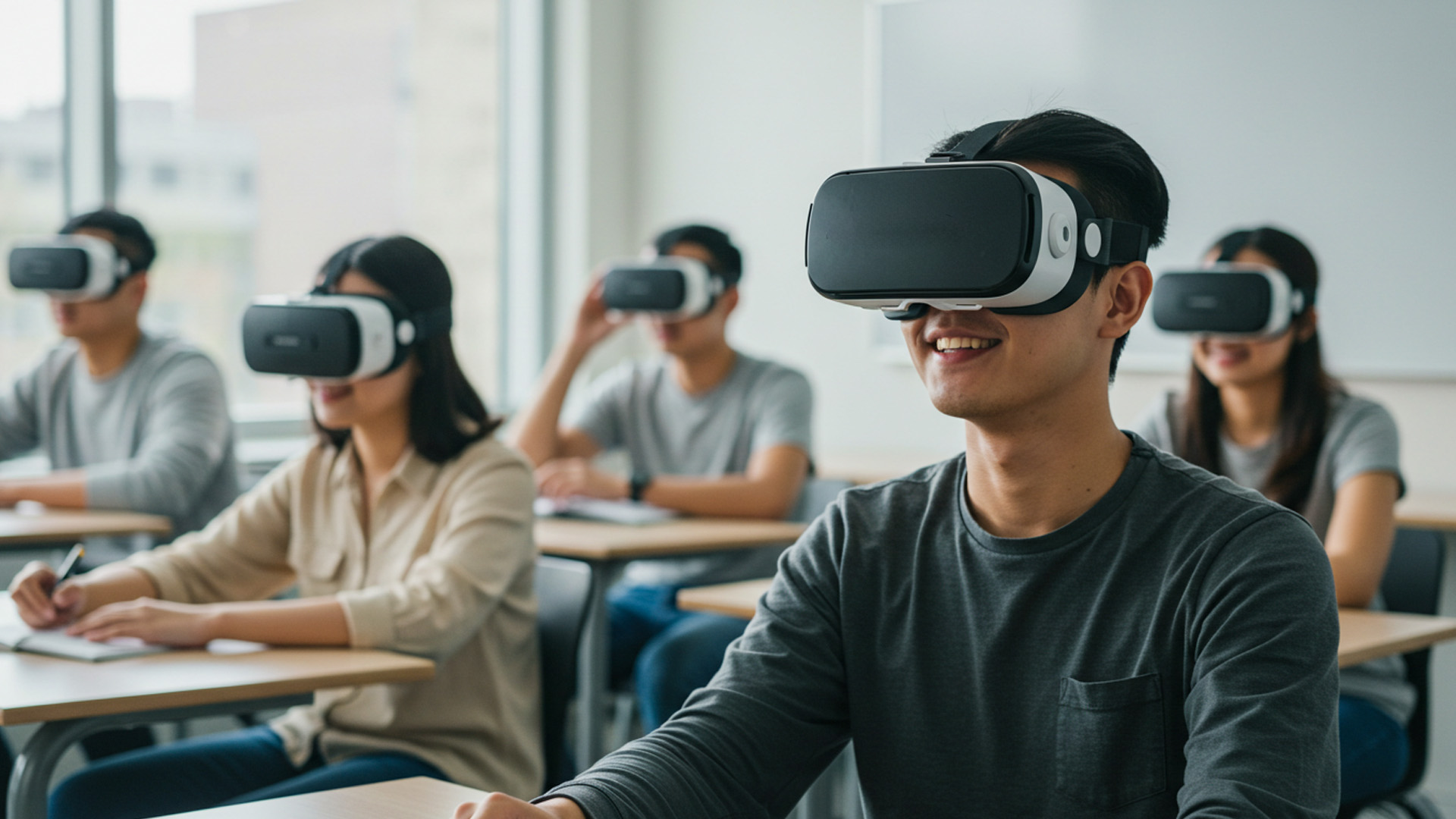
Imagine stepping into a lecture hall where your professor isn’t standing at a podium but guiding you through the bloodstream at a cellular level, or where a philosophy debate unfolds on the steps of an ancient Greek amphitheater. This isn’t a fantasy—it’s the daily reality of students in 2025. Virtual reality (VR) has matured from a futuristic experiment into a fundamental medium of instruction, merging immersion, interactivity, and imagination into higher education. In this new academic landscape, knowledge is no longer bound by paper, screens, or even physical space; instead, it becomes a lived, navigable environment where concepts are embodied rather than memorized.
Reinventing the Lecture Hall
From Monologue to Shared Experience
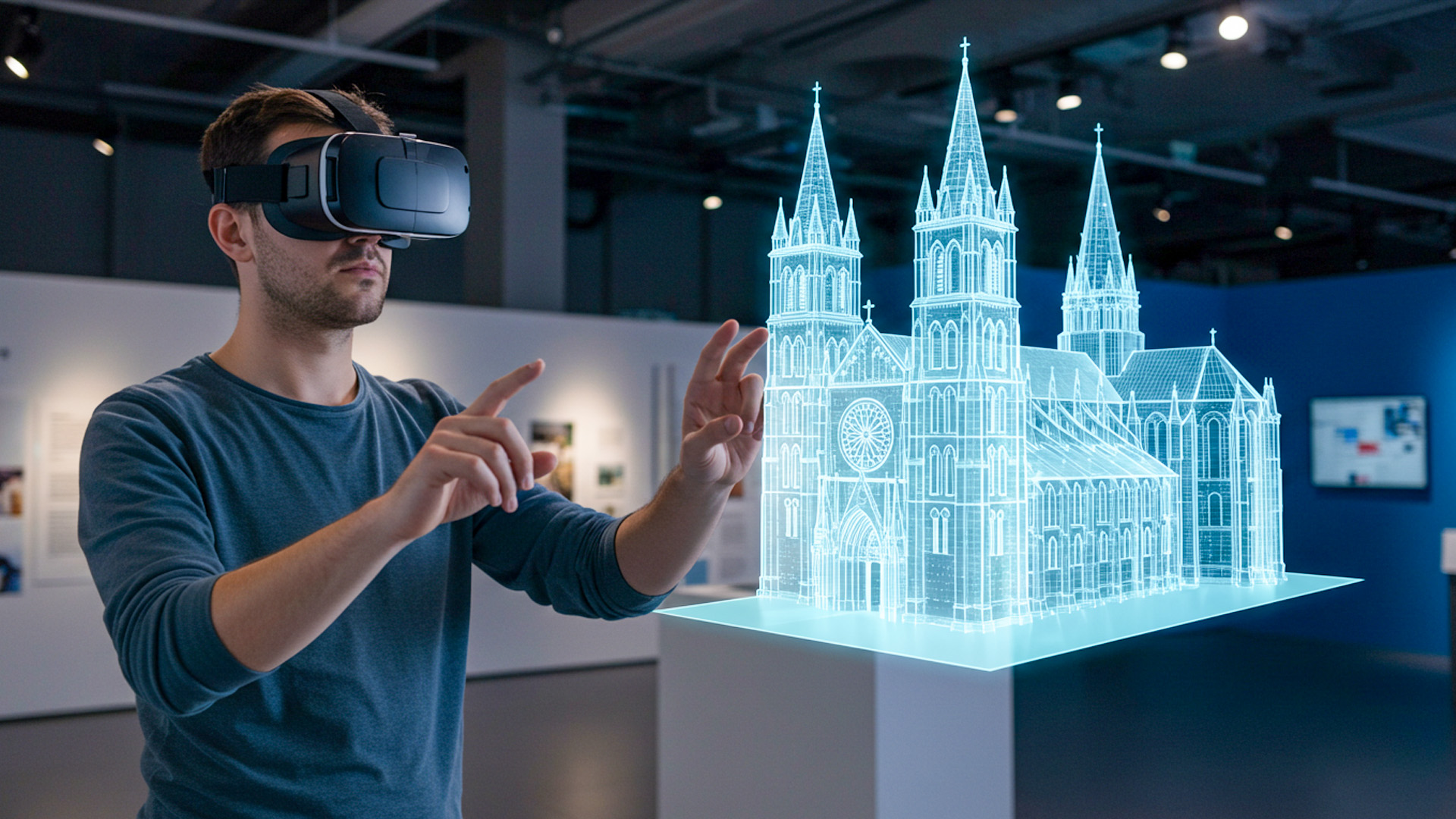
The classical lecture hall, with its rows of fixed seating and a single authoritative voice, has long been both revered and critiqued. VR challenges this model by decentralizing authority and transforming passive listening into co-experience. Instead of passively absorbing slides, students co-navigate through dynamic environments—walking through neural pathways in neuroscience or exploring architectural wonders in their original splendor. The lecturer becomes less of a broadcaster and more of a curator, guiding participants through knowledge landscapes that unfold in three dimensions.
This shift parallels the difference between watching a film and acting in a play. In a film, the viewer is an observer, but in a play, actors breathe life into words. Similarly, VR education transforms students into participants. They are not only seeing knowledge; they are inside it. The result is heightened engagement, deeper comprehension, and a democratization of learning experiences where curiosity drives the narrative as much as curriculum dictates it.
Immersive Pedagogical Design
Crafting a VR lecture isn’t a matter of transposing PowerPoint slides into 3D space—it demands rethinking pedagogy itself. Designers of academic VR spaces consider spatial cognition, sensory layering, and narrative flow. A history lesson, for instance, might allow students to wander a reconstruction of ancient Alexandria, interact with virtual merchants, and listen to ambient city sounds. These multi-sensory cues act as mnemonic anchors, ensuring facts aren’t memorized in isolation but attached to visceral experiences.
Such environments are crafted with “didactic dramaturgy,” a term educators now use to describe the theatrical sequencing of learning in VR. By building emotional arcs and climactic revelations into educational modules, instructors harness the same storytelling techniques used in cinema—except now, learners inhabit the narrative. The architecture of lessons becomes as important as the content itself, echoing Marshall McLuhan’s observation: “the medium is the message.”
Accessibility and Presence Beyond Geography
In 2025, the global lecture hall is no longer a metaphor—it’s a literal VR space. Students from Johannesburg, São Paulo, and Helsinki can attend the same chemistry demonstration, virtually clustered around a holographic molecule. Unlike video calls, VR offers “co-presence,” the subtle psychological sense that others share your space. Eye contact, gestures, and spatial positioning return to digital education, creating a level of interpersonal resonance previously lost in remote learning.
Accessibility also extends to inclusivity. For students with mobility impairments, VR provides environments navigable without physical barriers. For neurodivergent learners, sensory settings can be calibrated to reduce overstimulation. What was once considered accommodation is now intrinsic design, positioning VR not as a niche tool but as a universal equalizer in higher education’s evolving landscape.

Laboratories Without Walls
Simulated Experimentation
University labs have historically been constrained by resources: limited equipment, costly materials, and safety concerns. VR circumvents these limitations by enabling simulated experimentation at virtually zero marginal cost. Students can practice dissecting a heart, mixing volatile chemicals, or testing rocket fuel designs without risk or expense. Mistakes, rather than being dangerous or costly, become catalysts for iterative learning. Failure transforms from a stigma into a pedagogical asset.
These virtual laboratories are not simplistic approximations. Haptic feedback gloves now allow students to feel the resistance of tissues or the vibration of a centrifuge. AI-driven simulations dynamically respond to experimental errors, forcing students to troubleshoot in real time. The lab thus becomes an interactive puzzle where knowledge is operationalized, reinforcing the scientific method as lived practice rather than abstract principle.
Global Collaboration in Research
Research has always thrived on collaboration, but logistical barriers often impeded joint work across continents. VR research spaces dissolve those barriers. Picture biologists in Nairobi and Berlin simultaneously analyzing a magnified 3D protein structure, rotating it in shared space, annotating in real time. These environments allow distributed teams to think with their hands, not just their words. The screen is no longer a flat intermediary but a shared laboratory bench.
Universities now maintain persistent VR labs—spaces that remain active 24/7, accessible by authorized students and faculty across time zones. This continuity means projects never “pause” due to scheduling conflicts. A physicist in Tokyo may complete an experiment, and a colleague in Toronto picks up seamlessly hours later. Research, like the data it generates, flows continuously across borders, collapsing the temporal silos of academic collaboration.
Reducing Inequalities in Access
Perhaps the most transformative impact of VR labs lies in equity. Historically, institutions with limited funding were disadvantaged, unable to afford cutting-edge apparatus. VR democratizes access to high-grade facilities by digitizing them. A medical student in a rural university can train on the same complex surgical simulations as peers in elite institutions. Knowledge ceases to be stratified by wealth; opportunity is redistributed through code.
Of course, the initial infrastructure costs for VR remain significant. Headsets, haptic gear, and software licenses present barriers. Yet, universities worldwide are adopting shared resource models, akin to libraries lending equipment. In this sense, VR labs echo the democratizing spirit of the printing press: what was once scarce knowledge becomes accessible, scalable, and shareable across the globe.

Reimagining Cultural Immersion
Walking Through History
Textbooks can describe the grandeur of Machu Picchu or the intricacies of medieval marketplaces, but VR lets students walk these terrains. Cultural immersion through VR turns abstract history into embodied experience. Students not only observe reconstructed environments—they inhabit them. The subtle sounds of chisel against stone or the bustling noise of a 15th-century bazaar provide sensory immersion that textbooks cannot replicate. The result is historical empathy: students grasp not only the facts but the lived realities of the past.
Beyond awe, these reconstructions also sharpen critical inquiry. For instance, archaeology students exploring a VR simulation of Pompeii might compare spatial layouts with excavation maps, asking questions about urban planning and class dynamics. Learning becomes investigative rather than passive, a treasure hunt for insight. History, once locked in dusty archives, transforms into an interactive stage where students interrogate and interpret the past with fresh immediacy.
Language Learning Beyond Classrooms
Language acquisition thrives on immersion, but geographic immersion is costly and often impractical. VR language labs now allow students to “live” inside linguistic contexts. A learner of Japanese can practice ordering ramen in a bustling Tokyo eatery, navigating cultural nuances and intonation in a way that transcends textbook dialogues. The virtual environment becomes both classroom and playground, blending formal instruction with experiential practice.
Equally important, VR facilitates role-switching scenarios. Students practicing English may guide tourists through virtual landmarks, flipping from learner to teacher. This inversion strengthens confidence and cultural understanding. VR thus dismantles the sterile walls of language drills and repositions communication as lived, dynamic interaction—a dialogue not confined to chalkboards but grounded in simulated life-worlds that mirror real society.
Cross-Cultural Dialogues
Beyond content immersion, VR fosters interpersonal cultural exchange. Students from different countries can gather in virtual forums designed as cultural hubs—a Moroccan souk, a Brazilian carnival, or a Nordic fjord. These environments encourage dialogue not only about academic topics but about lived cultural practices. The context itself becomes a silent co-teacher, nudging conversations toward empathy and intercultural literacy.
In contrast to social media’s often superficial connections, VR encounters emphasize presence. Gestures, proximity, and body language return to cross-cultural exchange, giving authenticity to conversations. Students no longer just learn about other cultures; they inhabit them temporarily. In this sense, VR is a bridge across geographies and a solvent for stereotypes, cultivating a generation for whom cultural understanding is not abstract tolerance but lived familiarity.
Personalized Pathways to Mastery
Adaptive Learning Environments
VR education in 2025 leverages AI to tailor experiences uniquely for each student. Adaptive algorithms monitor performance, attention, and even biometric indicators like gaze duration or hand tremors. When a student struggles with a concept, the environment dynamically shifts—slowing down explanations, offering scaffolded hints, or reshaping tasks to match cognitive readiness. Education ceases to be one-size-fits-all; it becomes a bespoke journey sculpted in real time.
This personalization is akin to having a tutor who perceives not only your academic progress but also your emotional state. A mathematics student feeling overwhelmed may be guided into a calmer virtual space with simplified visuals, while another excelling might unlock advanced challenges. VR thus humanizes mass education, making each student feel seen, attended to, and challenged at the right level of difficulty.
Gamified Motivation and Retention
Gamification has long been a buzzword in education, but VR elevates it from points and badges to entire narrative-driven ecosystems. Students may embark on quests, where mastering calculus concepts helps them build bridges across fantastical terrains, or where learning anatomy equips them to heal virtual patients. These metaphors are not superficial gimmicks; they tie abstract knowledge to consequential outcomes within the virtual world, reinforcing retention through purpose.
Research shows that memory thrives on emotional salience and contextual embedding. By turning lessons into epic journeys or challenges, VR ensures that information isn’t rote-memorized but emotionally encoded. Students remember the exhilaration of solving an equation not because of a grade, but because it saved their expedition from collapse. Knowledge sticks because it matters within the virtual context, and thus becomes meaningful outside it too.
Ethical Considerations in Personalization
While personalization promises empowerment, it also introduces ethical dilemmas. Data-driven VR education collects vast amounts of biometric and behavioral data, raising concerns about privacy and surveillance. Who owns this data, and how is it safeguarded? Adaptive algorithms risk reinforcing biases if not carefully audited. A system may inadvertently steer marginalized students into less challenging pathways, perpetuating inequities under the guise of personalization.
Universities are now establishing VR ethics committees to oversee implementation, ensuring that autonomy and dignity remain at the forefront. Students are given transparency dashboards showing how their data shapes experiences. Ethical VR education, then, becomes a partnership—an implicit contract between learner and system. The challenge is balancing personalization with equity, crafting environments that empower without predetermining futures.
