

Brief Overview of Virtual Reality (VR): Definition and Basic Principles
Virtual Reality (VR) is an advanced technology that creates a simulated environment, distinct from the physical world. By leveraging computer-generated imagery and sensory inputs, VR immerses users in a digital realm, allowing interaction in a three-dimensional space. This technology is not merely about visual experiences; it integrates multiple senses, including sight, sound, and sometimes touch, to create a fully immersive experience.
Core Principles of Virtual Reality
- Immersion: The cornerstone of VR is immersion, which is the sensation of being physically present in a non-physical world. This is achieved through the envelopment of the sensory faculties, primarily sight and sound, giving users the feeling of being ‘transported’ into the VR environment.
- Interactivity: VR environments are interactive, allowing users to manipulate objects or perform actions. This interactivity is often facilitated through various devices like gloves with sensors, handheld controllers, and motion trackers that translate the user’s real-world movements into the virtual environment.
- Computer Simulation: At its core, VR relies on complex computer simulations. These simulations create realistic or fantastical 3D environments that can react and change in real-time in response to user interactions.
- Multisensory Feedback: While predominantly visual, VR often incorporates other sensory feedback for a more comprehensive experience. This includes auditory elements through spatial audio and haptic feedback, which simulates the sense of touch through vibrations or resistance.
- Real-time Interaction: VR systems operate in real-time, with immediate response to user actions. This real-time processing is crucial for maintaining immersion, as delays or lags can disrupt the sense of presence in the virtual world.
- Head-Mounted Displays (HMDs): The primary tool for experiencing VR is the head-mounted display, a device worn on the head with a close-proximity screen that blocks out the external environment and displays the virtual world.
- Tracking Technology: VR systems often use tracking technology to monitor the user’s head, hand, and body movements. This tracking ensures that the VR environment adjusts and responds accurately to the user’s movements, enhancing the sense of realism.
- Escapism and Simulation: VR offers escapism into a virtual world, allowing users to experience situations that are impossible or impractical in the real world. It ranges from realistic simulations, like flight training, to entirely fantastical environments for entertainment or education.
Virtual Reality is an innovative and evolving technology that offers immersive, interactive experiences by simulating realistic or imaginary environments. It has broad applications across various fields, including education, entertainment, training, and more, fundamentally altering how we interact with digital content.
Relevance of Virtual Reality to Universities: Integrating VR into Higher Education
Virtual Reality (VR) is making a significant impact in the realm of higher education, introducing novel and dynamic ways to enhance teaching and learning. As universities integrate VR into their curriculums, they are witnessing a transformative shift towards more interactive and immersive educational methodologies. This technology’s versatility is evident in its range of applications across various academic disciplines, demonstrating its potential to revolutionize the educational landscape.
One of the key benefits of VR in universities is the creation of immersive learning environments. These environments are particularly beneficial in fields where hands-on experience is paramount, such as medicine, engineering, and architecture. VR allows students to simulate real-world scenarios, offering practical experience in a risk-free setting. This is crucial in disciplines like medicine, where students can practice surgeries or diagnostic procedures in a controlled, virtual environment. Furthermore, VR aids in visualizing complex concepts, especially in science, technology, and mathematics. By interacting with these concepts in a 3D VR space, students can gain a deeper understanding of abstract theories and principles.
The integration of VR in higher education also significantly expands access and flexibility in learning. It enables remote students to participate in interactive and collaborative classroom environments, bridging geographical distances and offering new learning opportunities for students with physical disabilities. Collaborative projects and experiments can also be facilitated in a virtual space, allowing students from different locations to work together, fostering teamwork and enhancing communication skills.
Virtual Reality presents new dimensions for academic research, particularly in fields like psychology, where it can be used to study human behavior in controlled yet realistic scenarios. This opens up innovative approaches to research and experimentation, providing valuable insights into various fields of study.
As the world moves towards an increasingly digital future, VR helps prepare students for future workplaces that will likely rely on advanced technologies. Universities that incorporate VR into their teaching are not only enhancing educational experiences but also equipping students with essential technology skills.
The relevance of VR in universities extends beyond just enhancing educational experiences. It offers greater accessibility, practical training, unique research opportunities, and prepares students for a technologically advanced future. The integration of VR into higher education marks a significant stride towards more innovative, inclusive, and effective learning and teaching methodologies.
The integration of Virtual Reality (VR) into university education is a transformative development, reshaping the landscape of educational methodologies. By creating immersive and interactive learning environments, VR is enhancing the overall learning experience for students, allowing for a deeper understanding of complex concepts through visual and experiential engagement. However, this technology also presents unique challenges and opportunities within university settings. These range from the need to develop new pedagogical approaches and curricula tailored to VR, to addressing issues of accessibility and the digital divide. The incorporation of VR into higher education is not just an adaptation of new technology; it’s a significant paradigm shift that requires a reevaluation of traditional teaching and learning methods. As such, VR stands at the forefront of educational innovation, offering a glimpse into the future of how knowledge is imparted and absorbed in academic institutions.
Applications of VR in Universities – Immersive Learning
The advent of Virtual Reality (VR) in university settings has opened up a new realm of immersive learning experiences, transforming the way educational content is delivered and experienced. VR’s ability to create realistic, interactive environments enables a learning approach that is more engaging and impactful than traditional methods.
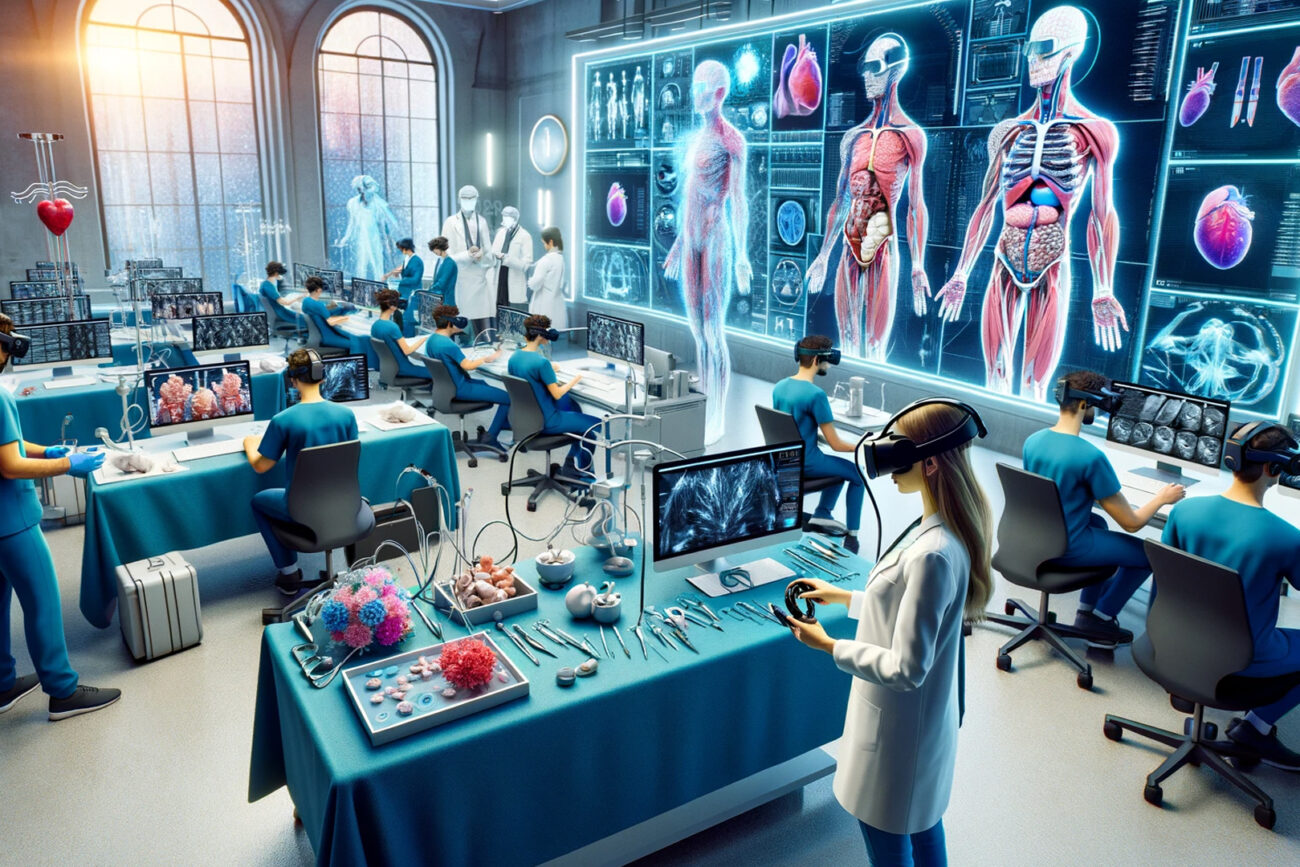
Virtual Laboratories
In the sciences, VR technology is used to create virtual labs. These labs simulate real-world laboratory environments, allowing students to conduct experiments and procedures without the need for physical lab space or materials. This not only reduces the costs associated with maintaining physical labs but also allows students to experiment in a risk-free setting. For example, chemistry students can mix volatile chemicals or conduct experiments that might be too dangerous or expensive in a real lab. Similarly, physics students can visualize and interact with complex physical phenomena that would be difficult to replicate in a traditional classroom.
Historical Recreations
In the field of humanities and social sciences, VR is used to recreate historical sites and events. This allows students to virtually ‘travel’ back in time and experience historical contexts first-hand. Imagine history students exploring a meticulously reconstructed ancient Rome or witnessing key events of World War II. Such immersive experiences deepen their understanding of historical contexts and events, making learning more engaging and memorable.
Medical Training Simulations
One of the most significant applications of VR in universities is in the field of medicine and healthcare training. VR simulations are used to train medical students in various procedures, from routine examinations to complex surgeries. These simulations provide a realistic and interactive environment where students can practice and hone their skills without the risk associated with real-life patients. For instance, a VR simulation might allow a medical student to perform a virtual heart surgery, offering a realistic experience of the procedure, complete with visual and tactile feedback. This not only enhances their learning experience but also prepares them for real-world clinical environments.
The application of VR in universities for immersive learning is revolutionizing educational experiences across various disciplines. Whether it’s through virtual labs in science, historical recreations for history lessons, or medical training simulations, VR is providing students with a new way of learning that is both engaging and effective. This immersive approach is not only enhancing the quality of education but is also preparing students for real-world applications of their knowledge and skills.
Distance Learning: Bridging Geographical Gaps with VR
Virtual Reality (VR) is redefining the landscape of distance learning by bridging geographical gaps in unprecedented ways. This technology is reshaping the concept of remote education, allowing students to experience a classroom-like environment from anywhere in the world. VR’s unique capability to create immersive virtual spaces enables a level of interaction and engagement that traditional online learning platforms struggle to match.
Creating Virtual Classrooms
With VR, universities can create virtual classrooms that mimic the physical experience of being in a lecture hall or seminar room. Remote students, wearing VR headsets, can be ‘present’ in a 3D classroom, interact with their peers, and engage with instructors in real time. This is a significant improvement over traditional video conferencing tools, as it offers a sense of spatial presence and participation. Students can look around the room, make eye contact with virtual classmates or instructors, and even engage in group discussions or activities, making the learning experience more engaging and dynamic.
Enhancing Engagement and Collaboration
VR also enhances student engagement and collaboration. In a VR classroom, remote students can work together on projects or participate in interactive learning sessions, just as they would in a physical classroom. For example, they can collaborate on a virtual whiteboard, conduct group research in a digital library, or participate in simulations and role-playing exercises. This collaborative aspect is vital for fostering a sense of community and teamwork among students who may be spread across different countries or continents.
Overcoming the Limitations of Traditional Distance Learning
Traditional distance learning often faces challenges such as a lack of engagement, feelings of isolation, and the difficulty of simulating hands-on learning experiences. VR addresses these issues by offering a more immersive and interactive form of learning. Students are no longer passive recipients of video lectures; instead, they are active participants in a dynamic learning environment that simulates the physical presence of a classroom.
Preparing for the Global Workforce
VR-equipped distance learning prepares students for the increasingly global and digitally connected workforce. By participating in a virtual learning environment, students develop digital literacy and adaptability skills that are essential in the modern workplace. They learn to collaborate and communicate effectively in virtual settings, a skill that is increasingly important as remote work becomes more prevalent.
VR is playing a pivotal role in transforming distance learning, making it more accessible, engaging, and effective. By creating virtual classrooms and enabling real-time interaction and collaboration, VR is not just overcoming geographical barriers; it is reimagining the possibilities of remote education. This technology is not only enhancing the educational experience for remote learners but also equipping them with essential skills for the future workforce.
Field-specific Applications: Specialized Training through VR in Various Faculties
The versatility of Virtual Reality (VR) technology allows it to be tailored for specialized training across various academic disciplines. Faculties like Engineering, Medicine, and the Arts are leveraging VR to provide students with unique, immersive learning experiences that are closely aligned with their field-specific needs. This integration of VR in specialized training is enhancing the depth and quality of education in these faculties.
Engineering
In Engineering, VR is used to simulate complex engineering environments and projects, allowing students to gain practical experience in a virtual setting. For instance, civil engineering students can use VR to design and test the structural integrity of bridges or buildings in a simulated environment. This hands-on approach to learning enables students to experiment with design and construction without the risks and costs associated with real-world projects. Similarly, mechanical engineering students can assemble or disassemble complex machinery in VR, gaining a deeper understanding of mechanical components and their functions.
Medicine
The field of Medicine has seen one of the most significant impacts of VR technology. Medical students and professionals use VR for detailed anatomical studies and surgical training. Through VR simulations, they can explore the human body in 3D, allowing for a more profound comprehension of human anatomy. Surgical training in VR offers a realistic, risk-free environment for practicing procedures, from basic suturing to complex operations. This not only enhances the learning experience but also prepares future doctors for the high-stakes environment of real-life surgeries.

Arts
In the Arts, VR is opening up new avenues for creativity and expression. Art and design students can use VR to create and interact with their art in three-dimensional space, transcending the limitations of traditional mediums. This technology is particularly beneficial for fields like architecture and interior design, where students can design, walk through, and modify virtual models of buildings and spaces. Additionally, in performing arts, VR can be used to simulate stage environments, allowing students to practice and refine their performances in a virtual rehearsal space.
Cross-disciplinary Applications
Beyond these specific examples, VR is fostering cross-disciplinary collaboration. For instance, VR projects in architecture might involve students from engineering, design, and environmental science, promoting an interdisciplinary approach to education. This collaborative aspect of VR training prepares students for the interconnected nature of the modern workplace, where cross-disciplinary skills are increasingly valued.
The application of VR in specialized training across various faculties is revolutionizing traditional educational methods. By providing immersive, realistic simulations tailored to the specific needs of each discipline, VR enhances the learning experience, offering students a deeper, more practical understanding of their field. As VR technology continues to evolve, its role in specialized training across diverse academic disciplines is likely to expand, further enriching the educational landscape in universities.
Benefits of VR in Education – Enhanced Engagement and Retention
The implementation of Virtual Reality (VR) in educational settings has brought about a significant shift in student engagement and information retention. The interactive nature of VR technology plays a crucial role in this transformation, offering an immersive learning experience that is both engaging and effective.
Fostering Active Learning
VR’s immersive environments engage students actively, as opposed to the passive learning often associated with traditional lecture-based teaching. In a VR setting, students are not mere spectators but active participants in their learning journey. This active engagement is key to maintaining student interest and motivation. When students are actively involved, they are more likely to be attentive and invested in the learning process.
Stimulating Interest Through Interactivity
The interactivity offered by VR creates a learning experience that is both fun and educational. This combination is particularly effective in capturing the attention of students who might find traditional classroom settings less stimulating. By turning learning into an interactive experience, VR makes education more appealing and accessible, especially for subjects that are traditionally seen as challenging or uninteresting.
Enhancing Memory Retention
The immersive nature of VR aids in better retention of information. Learning in a VR environment often involves visual, auditory, and sometimes even tactile experiences, which contribute to the creation of memorable learning experiences. The multisensory engagement in VR helps in forming stronger memory associations, making it easier for students to recall information later. This is particularly beneficial for complex or abstract subjects, where understanding and retention can be challenging.
Providing Real-World Context
VR can simulate real-world scenarios, providing context to theoretical knowledge. This contextual learning helps students understand how their learning applies in real-world situations, which is not only engaging but also reinforces the practical relevance of their studies. For example, a student studying architectural design can walk through and interact with their designs in a VR environment, gaining a deeper understanding of how their work translates into real structures.
Personalized Learning Experiences
VR also allows for personalized learning experiences. Students can learn at their own pace, revisiting concepts as needed, and exploring areas of interest in more depth. This personalization is crucial for catering to diverse learning styles and abilities, ensuring that all students have the opportunity to succeed.
The integration of VR in education significantly enhances student engagement and information retention. By providing an interactive, immersive, and contextual learning experience, VR transforms the educational landscape. This technology not only makes learning more enjoyable and memorable but also caters to a variety of learning styles, ultimately leading to a deeper understanding and better retention of knowledge.
Benefits of VR in Education – Safe and Controlled Environment
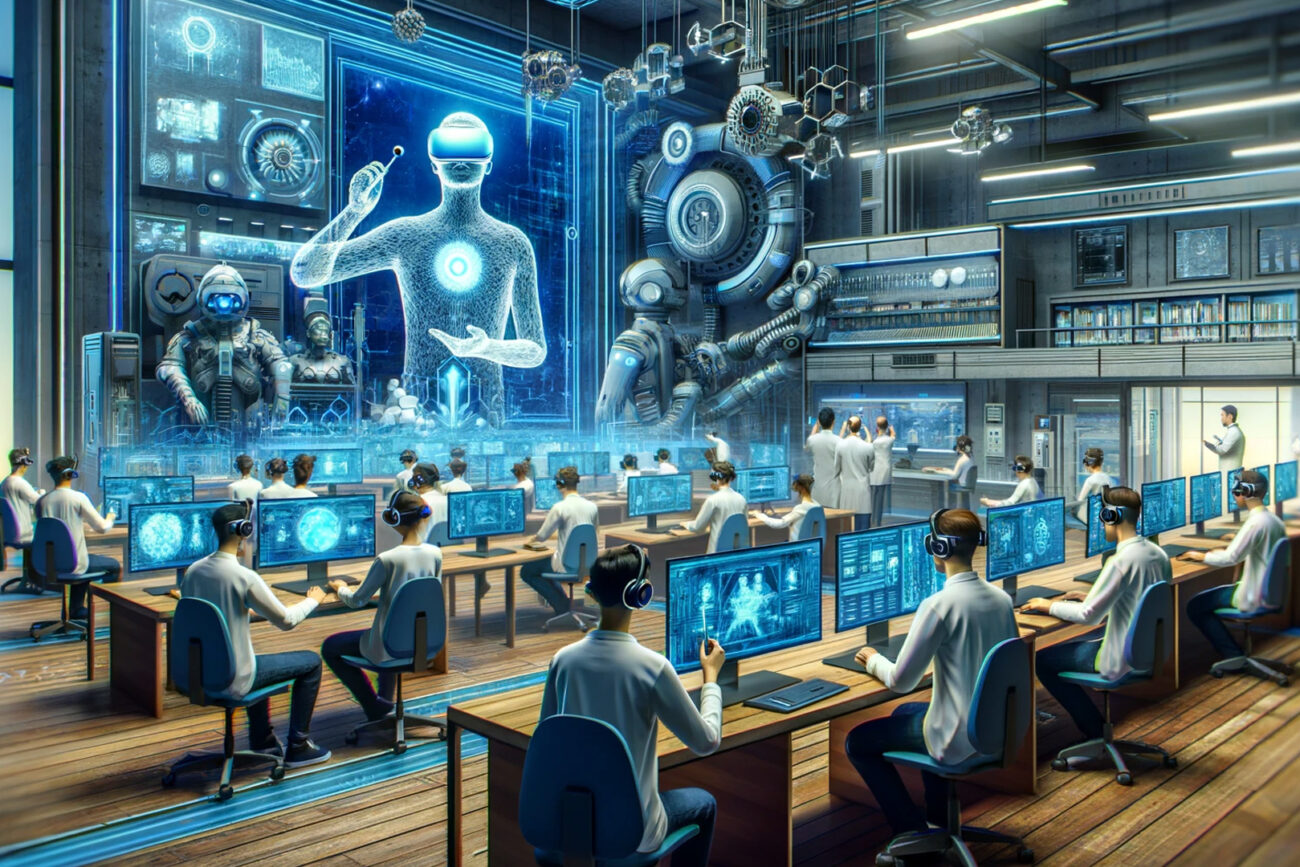
One of the most significant benefits of Virtual Reality (VR) in education is its ability to provide a safe and controlled environment for learning and practicing skills. This aspect is particularly crucial in fields such as medicine and engineering, where practical training involves inherent risks and complexities. VR technology mitigates these risks by offering a realistic, yet entirely controlled, virtual space for students to hone their skills.
Risk-Free Practical Training
In disciplines like medicine, where mistakes can have serious consequences, VR provides a platform for students to practice procedures without the risk of harming actual patients. For instance, medical students can perform surgical simulations in VR, allowing them to experience the intricacies of various procedures in a highly realistic setting. These simulations can be repeated as many times as necessary, enabling students to learn from their mistakes and improve their skills without any real-world repercussions.
Similarly, in engineering, VR allows students to experiment with complex machinery, electrical systems, or construction projects in a virtual setting. This not only removes the physical dangers associated with such experiments but also reduces the costs and logistical challenges of setting up real-world testing environments. Engineering students can test the limits of their designs, conduct stress tests, and troubleshoot problems in a completely safe virtual space.
Controlled Learning Scenarios
VR environments can be precisely controlled and manipulated to create specific learning scenarios. Instructors can design scenarios that target particular skills or concepts, tailoring the learning experience to the needs of their students. This level of control is not possible in the real world, where variables are more unpredictable. In a VR setting, every aspect of the environment, from the complexity of the task to the parameters of the simulation, can be adjusted to optimize the learning experience.
Building Confidence in a Safe Space
The safety and control offered by VR environments are also crucial for building student confidence. In a risk-free setting, students are more likely to try new things, explore different approaches, and take intellectual risks. This freedom encourages a deeper level of learning and experimentation. As students become more confident in their abilities within the VR environment, they are better prepared to handle real-world scenarios in their respective fields.
Error Analysis and Feedback
VR technology also allows for detailed tracking and analysis of student performance. Instructors can review how students interact with the VR environment, identify errors, and provide targeted feedback. This immediate and specific feedback is invaluable for the learning process, allowing students to understand and correct their mistakes efficiently.
The provision of a safe and controlled environment is a key benefit of VR in education, especially in fields like medicine and engineering. By offering a risk-free platform for practical training, VR not only enhances the learning experience but also ensures that students can practice and refine their skills in a secure and controlled setting. This aspect of VR not only advances the quality of education but also prepares students for real-world challenges in a safe and effective manner.
Benefits of VR in Education – Customization and Accessibility
Virtual Reality (VR) technology stands out in the educational landscape for its capacity to offer customized learning experiences and enhance accessibility, particularly for students with disabilities. This aspect of VR is transforming education into a more inclusive and personalized journey, catering to the diverse needs of the student population.
Personalized Learning Experiences
VR enables educators to tailor learning experiences to the individual needs and preferences of each student. This customization can range from adjusting the difficulty level of simulations to catering to different learning styles. For instance, a student who learns better through visual means can be provided with rich, immersive visual experiences, while another who prefers hands-on learning can engage in interactive simulations. This personalized approach ensures that each student can learn in a way that is most effective for them, enhancing their overall educational experience.
Moreover, VR can adapt to the pace of learning of each student. Unlike a traditional classroom setting where the pace is often set by the teacher or the curriculum, VR allows students to spend as much time as they need on particular topics or skills. This self-paced learning is particularly beneficial for students who may need more time to grasp certain concepts, ensuring that they do not feel rushed or left behind.
Enhancing Accessibility for Students with Disabilities
One of the most impactful aspects of VR in education is its potential to make learning more accessible to students with disabilities. VR can create learning environments that are accommodating and adaptable to various needs. For students with physical disabilities, VR can simulate physical activities or field trips that might be difficult or impossible in the real world. For example, a student who uses a wheelchair can participate in a virtual geological field trip, exploring terrains and environments that would be inaccessible otherwise.
For students with learning disabilities, VR can provide a distraction-free environment tailored to their learning needs. Interactive and immersive content can help maintain their focus and engagement, which can be challenging in a traditional classroom setting. Additionally, VR can simulate scenarios that help these students practice social skills or other abilities in a safe and controlled setting.
VR also holds promise for students with sensory impairments. For instance, VR experiences can be designed with enhanced visual cues for students with hearing impairments or with auditory descriptions for students with visual impairments. This level of customization ensures that all students, regardless of their abilities, have access to rich and immersive educational experiences.
The customization and accessibility features of VR technology are profoundly impacting the inclusivity and effectiveness of education. By allowing for personalized learning experiences and making education more accessible to students with disabilities, VR is not just enhancing the quality of education but is also ensuring that it is equitable and adaptable to the diverse needs of the student body. As VR technology continues to evolve, its role in democratizing and personalizing education is expected to grow, making it a pivotal tool in the future of educational practices.
Challenges and Considerations in VR Education – Technological and Financial Barriers
While the integration of Virtual Reality (VR) in education offers numerous benefits, it also presents certain challenges, particularly in terms of technology and finance. These barriers are significant considerations for institutions looking to adopt VR in their educational programs.
Technological Challenges
- Advanced Hardware Requirements: VR technology requires advanced hardware, including VR headsets, compatible computers or consoles, and sometimes additional peripherals like hand controllers or tracking systems. Ensuring that these devices are up-to-date and capable of running sophisticated VR applications is a challenge, especially given the rapid pace of technological advancement in the VR industry.
- Software Development and Maintenance: Developing educational VR content is not only technically demanding but also requires ongoing maintenance and updates. This includes creating immersive and interactive 3D environments, which necessitates expertise in VR software development. The need for specialized software tailored to specific educational needs can be a significant hurdle.
- Technical Support and Training: Implementing VR in education requires technical support for maintenance and troubleshooting. Additionally, educators and students often need training to effectively use VR technology, which can be a resource-intensive process.
Financial Barriers
- High Initial Investment: The cost of VR hardware and software can be prohibitively high, particularly for institutions with limited budgets. This includes the expense of purchasing VR headsets, computers with sufficient processing power, and the development or acquisition of educational VR content.
- Ongoing Costs: Beyond the initial investment, there are ongoing costs associated with the use of VR in education. These include software updates, hardware maintenance and upgrades, and potentially licensing fees for VR content. Additionally, as VR technology continues to evolve, there is a need for continual investment to keep the equipment and software up to date.
- Accessibility and Equity Concerns: The high cost of VR technology can exacerbate existing inequalities in education. Institutions in economically disadvantaged areas may struggle to afford VR technology, potentially widening the educational divide. This raises concerns about equitable access to advanced educational tools like VR.
Infrastructure Requirements
The integration of VR also demands robust digital infrastructure. This includes high-speed internet connections to handle the data requirements of VR applications and sufficient physical space to safely use VR equipment, particularly for experiences that involve physical movement.
While VR technology offers transformative potential in education, its integration is not without challenges. The technological complexity and financial investment required pose significant barriers to widespread adoption. Addressing these challenges requires thoughtful planning, resource allocation, and potentially the development of new funding models or partnerships. Overcoming these barriers is essential to harness the full potential of VR in education and to ensure that its benefits are accessible to all students, regardless of their institution’s financial capabilities.
Challenges and Considerations in VR Education – Curriculum Development
The integration of Virtual Reality (VR) into educational settings necessitates a reevaluation and redesign of curricula, a process that carries its own set of complexities. Developing and updating VR-based curricula is a multifaceted challenge, requiring not just technological know-how but also pedagogical innovation.
Aligning VR with Educational Goals
- Pedagogical Integration: One of the primary challenges is ensuring that VR technology is not just a novel addition but is effectively integrated into the curriculum to enhance learning outcomes. This requires aligning VR experiences with educational goals and learning objectives. Educators must carefully design VR experiences that complement and enhance traditional teaching methods rather than replacing or overshadowing them.
- Content Relevance and Quality: Developing curriculum content for VR involves ensuring that the material is not only engaging and interactive but also pedagogically sound and relevant to the course objectives. The content must be more than just visually appealing; it should actively contribute to the learning process.
Technical and Resource Constraints
- Content Creation and Adaptation: Creating VR content is resource-intensive, requiring technical expertise in VR software and hardware. Additionally, existing educational content often needs significant adaptation to be effective in a VR format, which can be a time-consuming and costly process.
- Keeping Pace with Technological Advances: VR technology is rapidly evolving, and curricular content needs regular updates to remain relevant and effective. This ongoing need for updates can strain resources and necessitate continuous professional development for educators.
Training and Professional Development
- Educator Training: Educators need to be trained not only in the technical aspects of VR but also in how to effectively incorporate it into their teaching. This involves understanding the pedagogical potential of VR and developing new teaching strategies tailored to this medium.
- Continuous Learning: As VR technology advances, continuous professional development becomes essential. Educators need to stay abreast of the latest developments in VR to effectively integrate these into the curriculum.
Assessment and Evaluation
- Developing Assessment Methods: Assessing student performance in a VR-based curriculum poses unique challenges. Traditional assessment methods may not be suitable for the interactive and immersive nature of VR learning experiences. Developing new methods of assessment that accurately reflect student learning in a VR environment is crucial.
- Feedback and Improvement: Continuous feedback and improvement are essential for a VR-based curriculum. This involves regularly gathering feedback from students and educators and making necessary adjustments to ensure the curriculum remains effective and engaging.
Developing and updating VR-based curricula is a complex task that goes beyond mere technological implementation. It requires careful consideration of how VR technology can best serve educational goals, the development of relevant and high-quality content, continuous training for educators, and the creation of appropriate assessment methods. Navigating these challenges is key to ensuring that VR technology is effectively and meaningfully integrated into the educational curriculum.
Future Implications and Developments in VR Education
The integration of Virtual Reality (VR) into educational settings is not just a contemporary shift but a harbinger of more profound changes in the future of education. The implications of VR extend far beyond current applications, suggesting a transformative impact on traditional educational paradigms, driving research and innovation, and preparing students for a digital future.
Evolving Educational Paradigms
- Redefining Classroom Dynamics: VR has the potential to redefine what constitutes a ‘classroom.’ The traditional physical classroom space could give way to virtual environments, where students from all over the world can interact and learn together. This global classroom concept breaks down geographical barriers, fostering a more diverse and inclusive educational experience.
- Shift Towards Experiential Learning: VR enables a shift from passive learning models to active, experiential learning. This could lead to a fundamental change in teaching methodologies, where hands-on, immersive experiences become the norm, enhancing student engagement and understanding.
- Personalization and Adaptive Learning: Future VR technologies may offer even more personalized learning experiences, using artificial intelligence to adapt to each student’s learning style, pace, and preferences. This could lead to highly individualized educational pathways, optimizing learning outcomes for every student.
Research and Innovation
- Advancements in Immersive Technologies: Ongoing research in VR is continuously improving the immersiveness and realism of virtual environments. Future developments might include more advanced haptic feedback systems, better motion tracking, and even integration of other senses, such as smell and taste, into VR experiences.
- Educational Data Analytics: Research is also focusing on harnessing data analytics within VR environments to gain insights into learning patterns, behaviors, and outcomes. This could lead to more effective teaching strategies and learning models based on empirical data.
- Interdisciplinary Applications: VR research is becoming increasingly interdisciplinary, combining insights from education, psychology, computer science, and neuroscience to create more effective and impactful learning experiences.
Preparing for a Digital Future
- Skill Development for the Digital Age: Universities need to prepare students for workplaces that are increasingly digital and technology-driven. Proficiency in VR and other digital technologies will likely be essential skills in many future careers.
- Adapting to New Work Environments: As VR technology becomes more prevalent in professional settings, universities have the responsibility to acclimate students to virtual work environments. This includes not only technical skills but also soft skills like virtual collaboration and communication.
- Fostering Innovation and Creativity: Universities can use VR to foster a culture of innovation and creativity, encouraging students to explore and develop new applications of VR technology across various fields.
The future implications and developments of VR in education are vast and multifaceted. VR is set to alter traditional educational paradigms, drive forward research and innovation in immersive technologies, and prepare students for a future in which digital and VR technologies are ubiquitous. As VR continues to evolve, its role in shaping the educational landscape and preparing students for the challenges and opportunities of a digital future becomes increasingly significant.